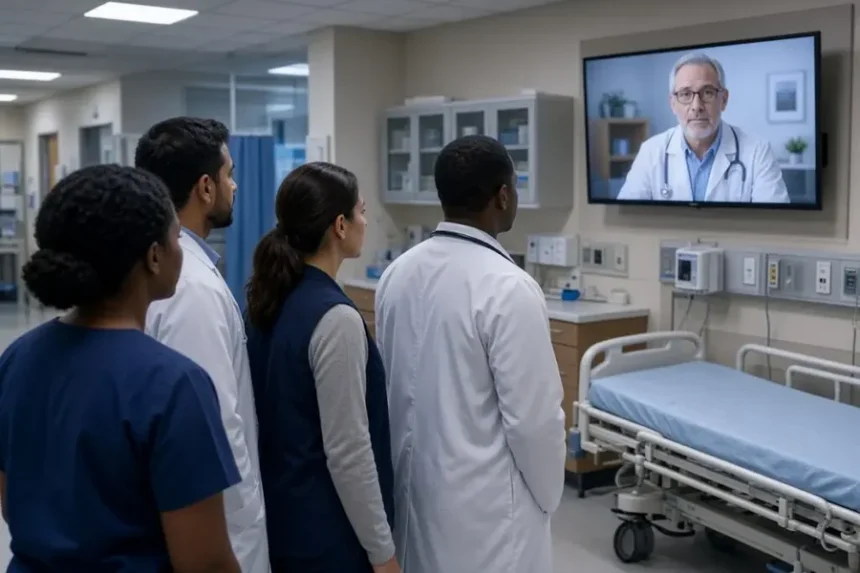
Mental health services are becoming an essential part of modern healthcare, yet many hospitals and clinics struggle to maintain adequate psychiatric coverage. Recruiting qualified psychiatrists and psychiatric nurse practitioners can be expensive and time-consuming, particularly for facilities that need coverage during evenings, weekends, or periods of increased patient demand. A flexible staffing approach allows healthcare organizations to meet these needs without relying entirely on permanent, full-time employees.
- Why Psychiatric Staffing Is a Challenge for Healthcare Facilities
- What Is a Psychiatry Staffing Network?
- Telepsychiatry Makes Flexible Staffing More Practical
- Reducing Costs Without Sacrificing Access to Care
- The Value of After-Hours Psychiatric Coverage
- Why Provider Networks Matter for Specialty Psychiatric Needs
- How to Choose the Right Psychiatric Staffing Partner
- 1.Verify qualifications and credentials
- 2. Evaluate coverage flexibility
- 3.Review specialty capabilities
- 4. Assess technology and communication
- 5. Understand pricing and responsibilities
- 6. Establish quality and continuity standards
- Conclusion
A well-organized psychiatry staffing network gives hospitals, outpatient clinics, and substance use disorder treatment facilities access to qualified psychiatric professionals when they need them. By combining telemedicine with in-person services, healthcare providers can expand access to mental health care while managing staffing costs and operational demands.
Why Psychiatric Staffing Is a Challenge for Healthcare Facilities
Hospitals and clinics often face difficulties recruiting and retaining psychiatric professionals. The hiring process involves recruitment expenses, credential verification, onboarding, compensation packages, and ongoing administrative responsibilities. These costs can be particularly challenging for smaller facilities and organizations serving communities with limited access to mental health specialists.
Staffing challenges become even more complicated when psychiatric services are needed outside standard business hours. A facility may have sufficient demand for psychiatric evaluations during the day but require additional coverage at night or on weekends. Hiring another full-time professional for these limited hours may not be financially practical.
Substance use disorder treatment centers also need reliable psychiatric support for patients with complex behavioral health needs. Without access to appropriate professionals, facilities may experience delays in evaluations, treatment planning, and follow-up care.
Flexible psychiatric staffing provides an alternative by allowing healthcare organizations to arrange coverage according to their actual needs rather than maintaining a large permanent workforce.
What Is a Psychiatry Staffing Network?
A psychiatry staffing network connects healthcare facilities with qualified psychiatric professionals who can provide clinical services through telemedicine or in-person arrangements. Instead of recruiting every professional independently, hospitals and clinics can access an established pool of providers with different qualifications, specialties, and availability.
This model helps healthcare organizations find professionals who match their specific requirements. For example, a hospital may need general psychiatric coverage for routine consultations, while another facility may require a specialist to support patients with more complex mental health conditions.
An established network can simplify several important processes, including:
- Provider selection: Identifying psychiatrists and psychiatric nurse practitioners who match a facility’s clinical needs.
- Faster implementation: Coordinating credentialing, privileging, and onboarding so providers can begin working once all required approvals are complete.
- Flexible scheduling: Arranging coverage for specific shifts, weekends, evenings, or other periods of demand.
- Specialty access: Connecting facilities with psychiatric professionals who have experience in particular treatment areas.
- Scalable services: Adjusting psychiatric coverage as patient volumes and operational requirements change.
These advantages make network-based staffing an attractive option for healthcare organizations that want to expand services without managing every aspect of recruitment themselves.

Telepsychiatry Makes Flexible Staffing More Practical
Telemedicine has changed how healthcare organizations deliver psychiatric services. Through secure video consultations and other appropriate digital tools, psychiatric professionals can evaluate patients, provide consultations, and support treatment planning without always being physically present at the facility.
For hospitals and clinics, telepsychiatry can help address staffing gaps that would otherwise be difficult to fill. A facility in an underserved community may be able to access psychiatric expertise remotely rather than relying exclusively on local recruitment.
Virtual services can also support after-hours coverage. Instead of employing a permanent psychiatrist for an entire overnight shift, a hospital may arrange remote psychiatric coverage during the hours when it is most needed. The appropriate arrangement depends on patient acuity, clinical responsibilities, state regulations, and the facility’s emergency procedures.
Telepsychiatry is not a complete replacement for in-person care in every situation. Some patients require physical assessments, specialized interventions, or a higher level of care. A combination of remote and on-site services can therefore provide a more adaptable solution for many healthcare settings.
Reducing Costs Without Sacrificing Access to Care
Hiring a full-time psychiatrist involves more than paying a salary. Healthcare organizations must also consider benefits, payroll expenses, recruitment costs, professional credentialing, scheduling, and other employment-related responsibilities.
Outsourcing psychiatric services can help facilities manage these expenses by matching coverage to their actual needs. Rather than maintaining a permanent employee for every shift, an organization may arrange psychiatric support for selected hours, days, or service periods.
Consider a community hospital that receives relatively few psychiatric consultations during certain overnight hours. Recruiting a full-time professional exclusively for those periods may not be cost-effective. Outsourced coverage could offer another option, allowing the hospital to arrange qualified psychiatric support according to its operational requirements.
Potential financial advantages include:
- Lower dependence on additional full-time hires.
- Greater flexibility when patient demand fluctuates.
- Reduced recruitment and administrative burdens.
- Access to specialized professionals without necessarily creating permanent positions.
- More predictable staffing arrangements based on agreed coverage requirements.
Actual savings depend on service volume, contractual rates, provider availability, and the facility’s existing workforce. Healthcare leaders should compare the total cost of outsourced coverage with the full cost of direct employment before making a decision.
The Value of After-Hours Psychiatric Coverage
Mental health needs do not follow a standard office schedule. Patients may require psychiatric assessments during evenings, overnight periods, weekends, and holidays. Hospitals and behavioral health facilities must therefore develop staffing arrangements that reflect the realities of patient care.

Maintaining a psychiatrist on-site around the clock can be difficult, especially when demand varies significantly between shifts. A flexible staffing arrangement can help facilities access psychiatric expertise during selected periods without employing an additional permanent staff member solely for those hours.
After-hours coverage may support emergency department consultations, inpatient psychiatric evaluations, behavioral health assessments, and coordination with existing medical teams, depending on the services included in the agreement.
For substance use disorder facilities, timely psychiatric support can also help clinicians assess co-occurring mental health concerns and coordinate appropriate treatment. However, telepsychiatry and outsourced staffing should operate within clearly defined clinical protocols, escalation procedures, and emergency response plans.
The goal is to make appropriate psychiatric expertise available when patients need it while maintaining safe, coordinated care.
Why Provider Networks Matter for Specialty Psychiatric Needs
Not every healthcare facility has the same patient population. A general hospital may need consultation-liaison psychiatry, while a behavioral health organization may require professionals experienced in addiction psychiatry or other specialized areas.
Recruiting a specialist directly can be challenging when the position offers limited hours or the local workforce is small. An established provider network can broaden the pool of potential candidates and help facilities identify professionals whose experience aligns with their clinical needs.
A network-based approach can also support continuity when staffing requirements change. If a facility expands its services, increases operating hours, or experiences a temporary staffing shortage, it may be able to request additional coverage through the same staffing partner.
FasPsych is one example of a company offering outsourced psychiatric staffing, primarily through telemedicine and also through on-site services. Its established network of psychiatric providers helps hospitals, clinics, and substance use disorder facilities connect with professionals suited to their requirements. Facilities exploring a psychiatry staffing network can evaluate this approach alongside other staffing models to determine which arrangement best supports their patient population, budget, and service goals.
How to Choose the Right Psychiatric Staffing Partner
Selecting a staffing partner requires more than comparing hourly rates. Healthcare organizations should assess whether the provider can meet their clinical, operational, and regulatory requirements.
1.Verify qualifications and credentials
Confirm that psychiatric professionals hold the appropriate licenses, training, and experience. Credentialing and hospital privileging requirements should be clearly understood before services begin.

2. Evaluate coverage flexibility
Determine whether the partner can provide the specific hours, shifts, and service types required. Ask about weekend availability, after-hours coverage, emergency consultation arrangements, and the process for requesting additional support.
3.Review specialty capabilities
If the facility serves patients with particular psychiatric or substance use treatment needs, confirm that suitable professionals are available within the network.
4. Assess technology and communication
For telepsychiatry, evaluate the security, reliability, and usability of the technology. Establish how remote providers will communicate with on-site clinicians, access relevant patient information, and document their services.
5. Understand pricing and responsibilities
Review billing structures, minimum coverage requirements, cancellation policies, credentialing responsibilities, and any additional administrative costs. A transparent agreement helps facilities compare outsourced services with direct employment.
6. Establish quality and continuity standards
Ask how the staffing partner manages provider availability, coverage changes, clinical documentation, and service quality. Clear procedures help minimize disruption when a provider becomes unavailable.
Conclusion
A flexible psychiatric staffing strategy can help healthcare organizations respond to workforce shortages, control staffing expenses, and improve access to mental health services. By combining telepsychiatry with on-site coverage, hospitals, clinics, and substance use disorder facilities can arrange services around patient needs instead of relying exclusively on permanent, full-time employees.
An established provider network adds further value by connecting facilities with qualified professionals, supporting specialty requirements, and simplifying the process of expanding psychiatric coverage. With careful evaluation of costs, credentials, technology, and clinical responsibilities, healthcare organizations can build a staffing model that supports both operational efficiency and quality patient care.